
Last updated September 25, 2026
Seasonal ADU Care for Burbank: Year-Round Homeowner’s Guide
The October-December Santa Ana season in Burbank regularly produces wind gusts above 60 mph, enough to lift improperly fastened standing-seam metal roofing if the clip spacing in the structural drawings was not verified during installation. We’ve seen this exact failure on ADUs where the finish looked correct but the fastening pattern was never checked against the permit set. This guide gives Burbank ADU owners a month-by-month maintenance task list calibrated to our specific climate stressors: Santa Ana winds, UV exposure higher than coastal LA, wildfire smoke, and clay-heavy soils that behave differently in drought and rain. You’ll learn what to inspect, when to inspect it, and what documentation to keep so your ADU maintains its value and its warranty coverage.
Quick Answer
Burbank ADU maintenance follows four distinct seasons: post-Santa Ana roof and penetration inspections (January), pre-wildfire HVAC filter and exterior sealing (May-July), wet-season drainage and foundation perimeter checks (November-March), and year-round UV monitoring of exterior finishes with recoating at 5-10 year intervals depending on material. A documented photo record of each inspection protects your warranty and resale value.
Table of Contents
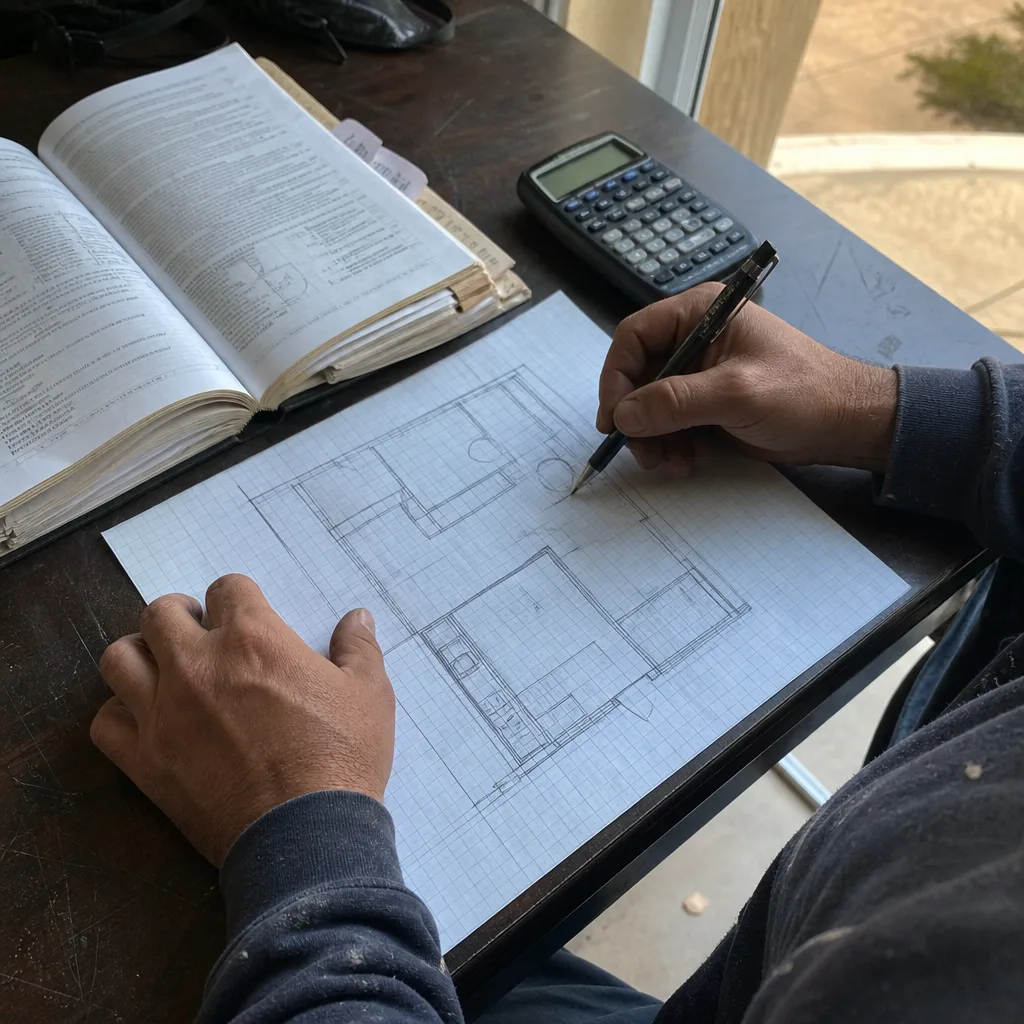
- The Post-Santa Ana Inspection: What Wind Actually Damages
- UV Degradation Timeline for Burbank ADU Exteriors
- Wildfire Smoke and Your ADU’s Mini-Split System
- Wet Season: Clay Soils and Hydrostatic Pressure
- Burbank Water and Power: Seasonal Rate Strategy
- Month-by-Month Maintenance Calendar
- Special Notes for Prefab and Modular ADUs
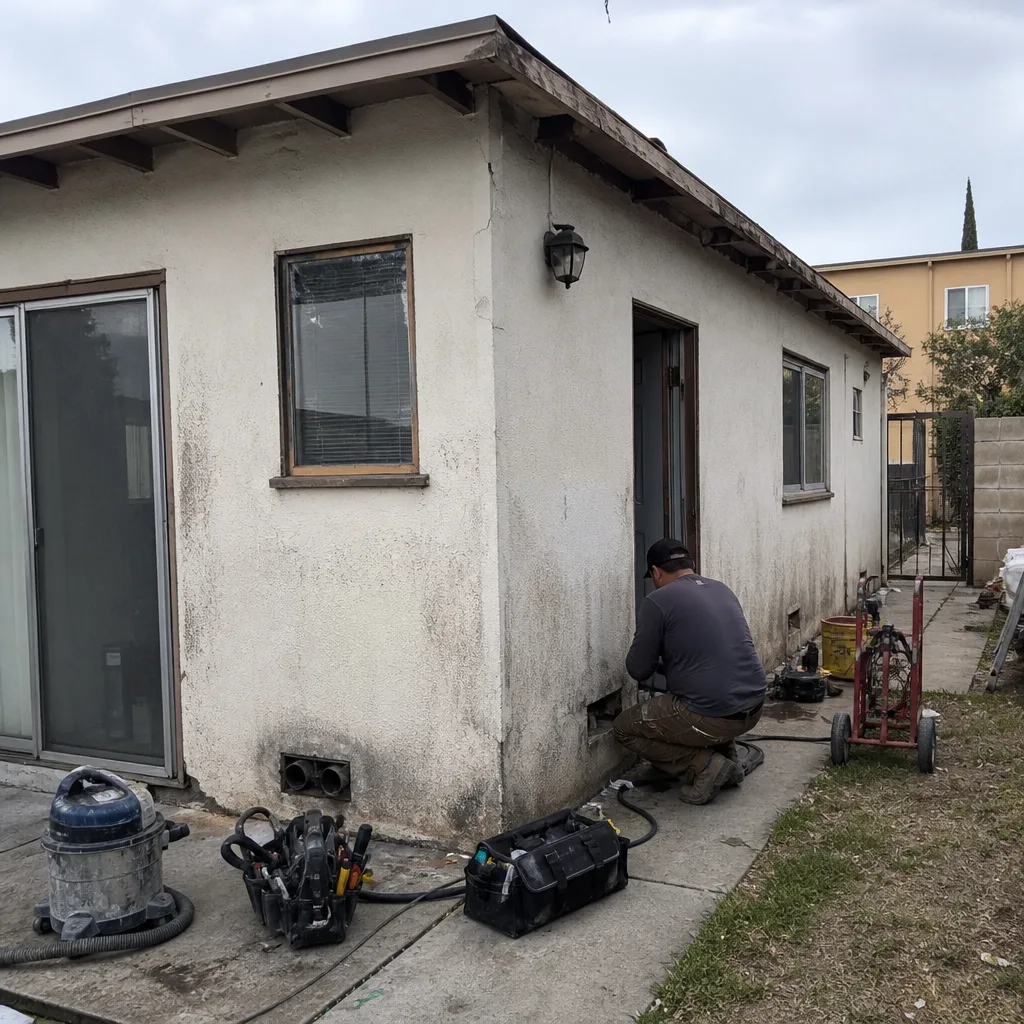 Before
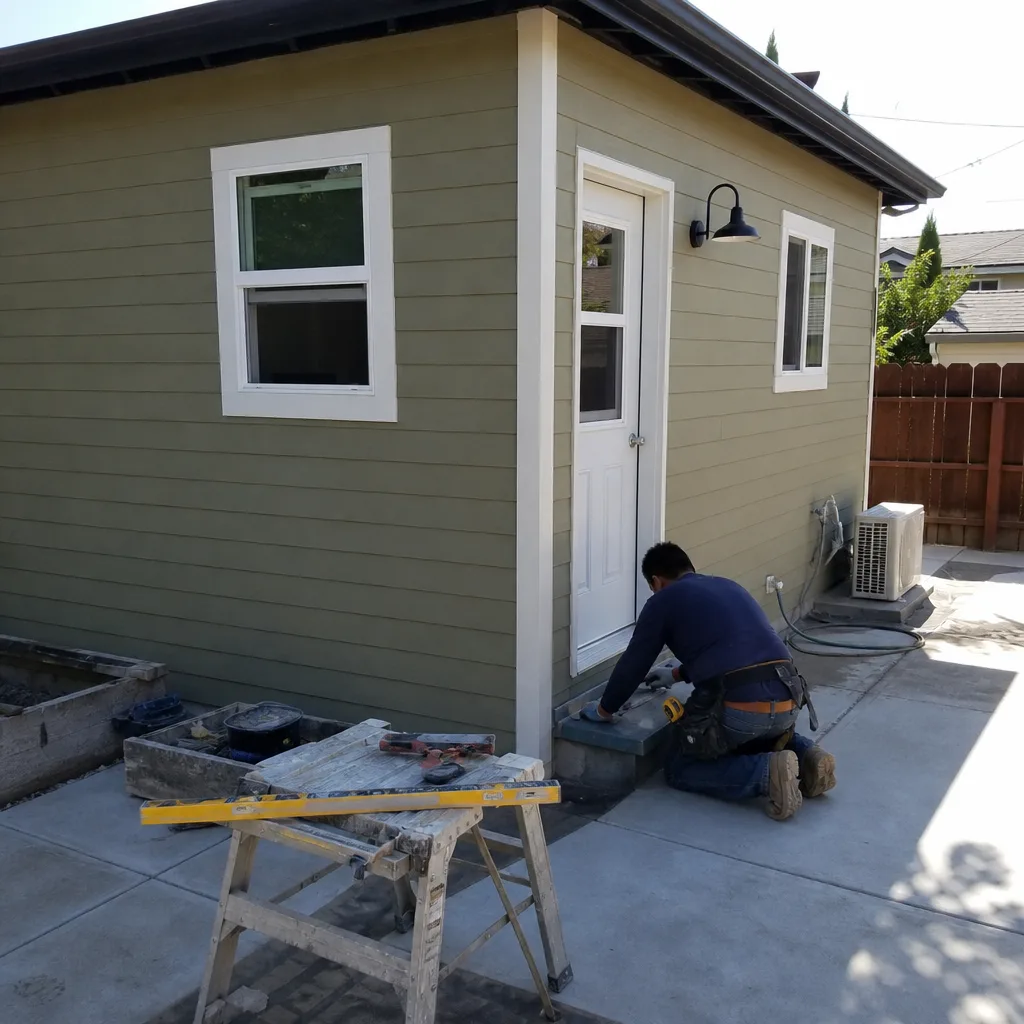 After
AfterThe Post-Santa Ana Inspection: What Wind Actually Damages
Santa Ana winds in Burbank peak between October and December, with sustained speeds of 25-35 mph and gusts regularly exceeding 60 mph at the foothill edges of the Verdugo Mountains. For ADUs, this creates three specific failure points that generic California maintenance guides miss entirely.
Roofing and edge metal. Standing-seam metal roofing, specified on many new detached ADUs in Burbank for its fire rating and longevity, relies on concealed clips at precise spacing. The structural drawings specify clip spacing based on wind-load calculations for your specific site. In our experience, if that spacing was not verified during installation - if the crew used a “standard” 24-inch spacing instead of the engineered 16-inch spacing - the Santa Anas will find it. After a major wind event, walk the roof perimeter (safely, from a ladder or with binoculars) and look for lifted edges, popped seams, or missing ridge caps. Document with photos. The 365-Day Done Right Promise covers fastening verification, but only if you can show the condition changed after installation.
Utility penetrations. Mini-split line sets, vent terminations, and conduit entering the ADU create openings that flex in wind. Check the sealant at each penetration. Silicone and polyurethane sealants degrade faster in Burbank’s UV than manufacturers’ generic specs suggest. We replace penetration sealant at 18-month intervals on our maintained ADUs, not the 3-5 years the tube claims.
Foundation perimeter. Wind-driven debris scours the grade at the ADU’s base. After Santa Ana season, verify that drainage slopes still direct water away from the slab. In the Rancho area and hillside zones of Burbank, we’ve seen gravel bedding displaced enough to create ponding zones that become problems in January rains.
Post-Santa Ana checklist:
- Photograph roof condition from four angles, noting any lifted metal or missing fasteners
- Inspect all utility penetrations for cracked or shrunken sealant
- Verify drainage slope at foundation perimeter; regrade if scoured
- Check gutter and downspout attachment; Santa Ana gusts pull hangers loose
- Document findings with dated photos stored with your permit set
UV Degradement Timeline for Burbank ADU Exteriors
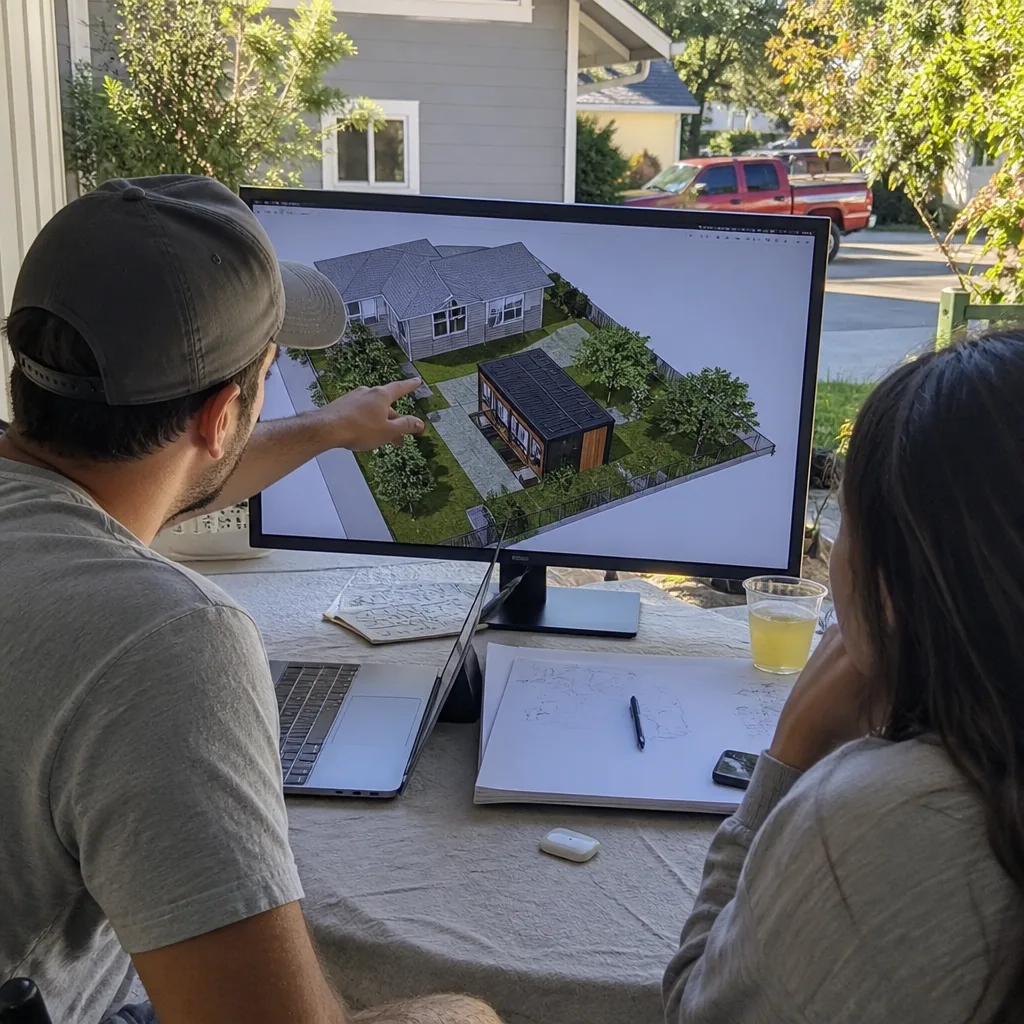
Burbank’s UV index averages 6-7 in winter and peaks at 9-10 June through August, significantly higher than Santa Monica or Venice due to our inland position and reduced marine layer penetration. This accelerates exterior finish degradation beyond what coastal California guides suggest.
Stucco (traditional three-coat or one-coat systems). On garage conversion ADUs in Burbank, stucco is the default finish to match the primary residence. Elastomeric color coats begin chalking at year 7-9 in Burbank exposure, versus 10-12 on the coast. The chalking is not cosmetic; it indicates polymer breakdown that precedes cracking. Recoat at first visible chalking, not after cracking begins. A full restucco with new base and color coat runs $18-$28 per square foot in the Burbank market, but spot recoating of failing areas is viable if caught early.
Fiber cement (James Hardie and equivalent). James Hardie siding carries a 30-year limited warranty, but the finish warranty - the color coat - is 15 years for prefinished products and requires maintenance recoating at year 10-12 in high-UV zones. Burbank qualifies. Site-painted fiber cement needs repainting at year 5-7. The substrate does not rot, but UV-degraded paint film cracks at board edges, allowing capillary water entry that damages the substrate from within. Inspect board edges annually; hairline cracking at edges is your recoat signal.
Wood composite and engineered siding. These products vary by manufacturer, but the common failure mode in Burbank is edge swelling from moisture entry through UV-degraded surface coating. The Magnolia Park and Burbank Hills areas, with more mature tree canopy and corresponding humidity variation, see this earlier than open-sun sites. Inspect for edge fuzzing or swelling at year 4; plan recoating at year 5-6.
| Finish Type | First Inspection | Recoat Trigger | Typical Burbank Recoat Interval |
|---|---|---|---|
| Stucco, elastomeric color coat | Year 5 | Surface chalking | 7-9 years |
| Fiber cement, site-painted | Year 3 | Edge hairline cracking | 5-7 years |
| Fiber cement, prefinished | Year 5 | Color fade or chalking | 10-12 years |
| Wood composite siding | Year 3 | Edge fuzzing or swelling | 5-6 years |
The Haven Standard requires that we document original finish specifications in the project closeout packet. Check your packet for the specific product and batch; touch-up paint matched to the original formula prevents the patchy appearance that reduces resale appeal.
Wildfire Smoke and Your ADU’s Mini-Split System
Burbank’s wildfire smoke exposure has extended from a two-week August event to a season running May through October, with AQI spikes above 150 now occurring in multiple months. This changes mini-split maintenance schedules significantly.
Filter intervals. Standard manufacturer guidance assumes suburban air quality with filter cleaning at 2 weeks and replacement at 6-12 months. In Burbank’s smoke season, we recommend cleaning every 7-10 days during AQI >100 events and replacing filters at 3-4 month intervals, not annually. The cost is $12-$18 per filter for standard sizes; the cost of compressor damage from restricted airflow is $800-$2,400.
Filter type matters. The basic mesh filter captures large particulate but not PM2.5. For ADUs housing respiratory-sensitive occupants, upgrade to MERV 13 or equivalent at filter replacement. Verify with your mini-split manufacturer that higher MERV does not void warranty; most modern systems accept it, but some older units have airflow limits. We specify MERV-compatible systems in our ADU Design & Permitting in Burbank work when clients request it.
Condenser coil cleaning. Smoke particulate settles on outdoor condenser coils, reducing heat transfer efficiency. A 10% reduction in coil efficiency increases compressor runtime and utility cost proportionally. In Burbank’s extended smoke season, schedule professional coil cleaning in November, after smoke season ends, and again in April before cooling load peaks. Between professional cleanings, gentle water rinse (low pressure, straight-on angle to avoid fin damage) monthly during heavy smoke periods.
Fresh air intake considerations. Some new detached ADUs in Burbank include HRV or ERV systems for code compliance. These have their own filters, typically at 3-6 month replacement intervals. In smoke season, treat these like mini-split filters: inspect monthly, replace at first visible loading. The energy recovery core is not designed for heavy particulate and is expensive to replace.
Wet Season: Clay Soils and Hydrostatic Pressure
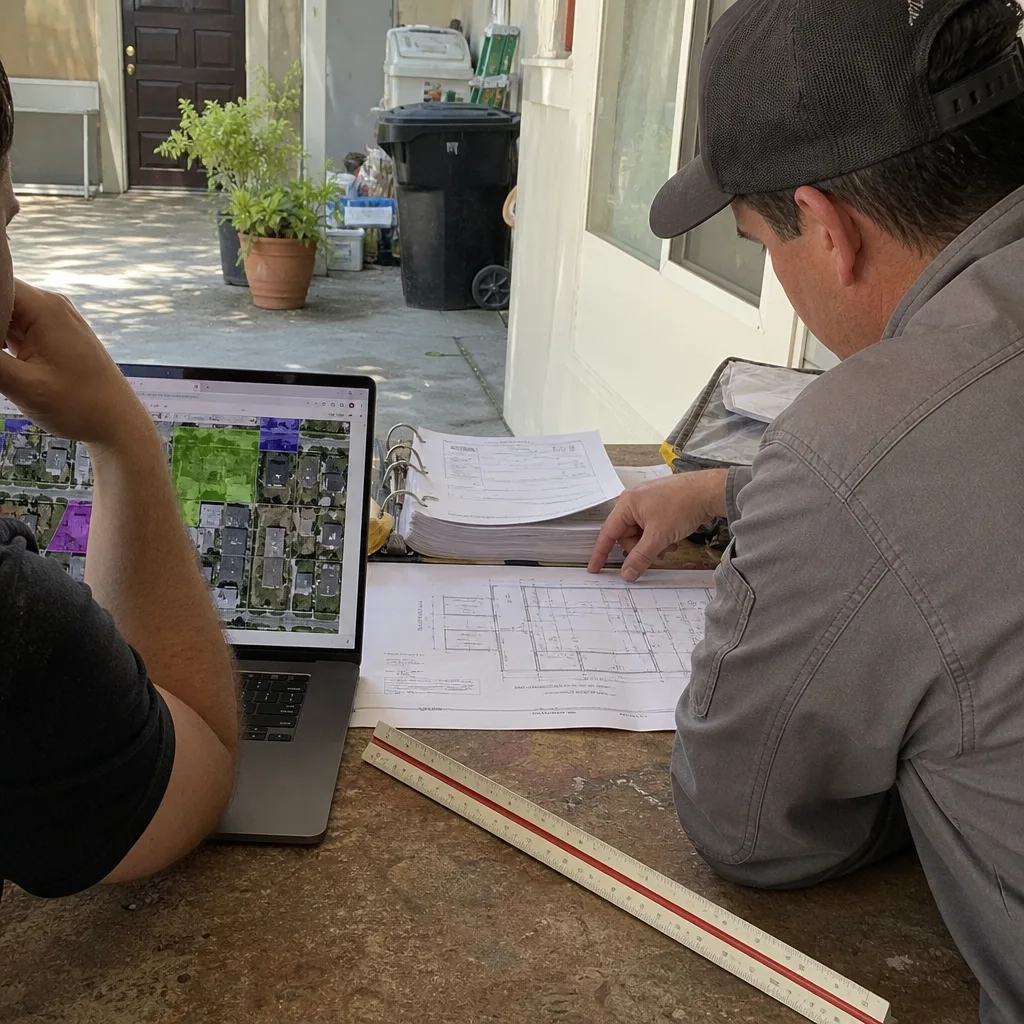
Burbank’s soils are predominantly clay-loam and clay, with high shrink-swell potential. After extended drought, these soils become desiccated and cracked. When January-March storms arrive, water enters these cracks rapidly, creating hydrostatic pressure against ADU slab edges that does not occur in sandy or consistently moist soils.
The mechanism. Hydrostatic pressure is the lateral force exerted by water in soil against a restraining structure. For ADU slabs, the pressure is highest at the slab edge where water accumulates. In Burbank’s cycle of drought-hardened soil followed by rapid saturation, we’ve measured slab-edge moisture content increases from 8% to 28% in 48 hours after the first major storm. This creates two problems: pressure-driven moisture intrusion at the slab-wall joint, and differential settlement if soil swells unevenly.
Preventive maintenance. The solution is not waterproofing - it’s drainage management. Maintain a minimum 6-inch drop over 10 feet from the ADU slab edge. In Burbank’s flat lots, particularly in the Media District and downtown-adjacent areas, this may require installing or maintaining French drains or channel drains. Clean gutters and downspouts before November; verify downspout discharge is at least 6 feet from the foundation or tied to a drainage system. In hillside areas like Burbank Hills and Brace Canyon, check that slope drainage above the ADU is not directing runoff toward the structure.
Post-storm inspection. After the first major storm each season, inspect the ADU interior at slab edges for moisture staining or efflorescence - the white powdery deposit that indicates water is moving through concrete. Document with photos. Efflorescence is not structural damage, but it confirms the drainage system is not adequate. Address drainage before the next storm cycle.
Expansion joint maintenance. The control joint between ADU slab and any adjoining concrete (patios, walkways) is a common water entry point. Sealant in these joints lasts 3-5 years in Burbank’s UV. Replace when the joint shows cracking, separation, or missing material. The material cost is $8-$15 per linear foot for professional-grade polyurethane; the cost of slab moisture remediation starts at $4,000.
Burbank Water and Power: Seasonal Rate Strategy
Burbank Water and Power (BWP) operates a tiered rate structure that significantly affects ADU operating costs. Understanding the tiers lets you schedule high-consumption activities to minimize cost, particularly for ADUs with electric water heaters, dryers, or EV charging.
Summer peak pricing. BWP’s peak period runs June through September, with rates approximately 40% above baseline for usage above tier thresholds. For ADUs with their own meter, this means a mini-split running continuously in August can push usage into Tier 2 or Tier 3 quickly. The threshold varies by climate zone; Burbank is in Climate Zone 9 for BWP purposes.
Practical scheduling. If your ADU has an electric water heater, shift laundry and dishwasher use to off-peak hours (before 10 a.m. and after 8 p.m. weekdays, all day weekends). For ADUs with EV charging, a Level 2 charger set to start at 10 p.m. avoids all peak pricing. The savings are $30-$60 monthly in summer for typical ADU usage patterns.
Solar and ADU metering. BWP offers net metering for solar-equipped properties, but the ADU must be on the same meter as the primary residence to share solar credits, or have its own solar system. We’ve designed ADU Design & Permitting in Burbank with both configurations. If the ADU is separately metered without solar, summer peak costs are unavoidable without behavioral scheduling. Document your meter configuration and rate schedule; BWP updates tiers periodically and posts changes 60 days in advance.
Water rates and irrigation. ADUs with dedicated outdoor space face BWP’s drought-response water pricing, which includes surcharges for usage above conservation targets. Drip irrigation with smart controllers, scheduled for early morning, minimizes evaporation and keeps usage within Tier 1. Replace spray heads on any ADU irrigation - the efficiency difference is 30-50%.
Month-by-Month Maintenance Calendar
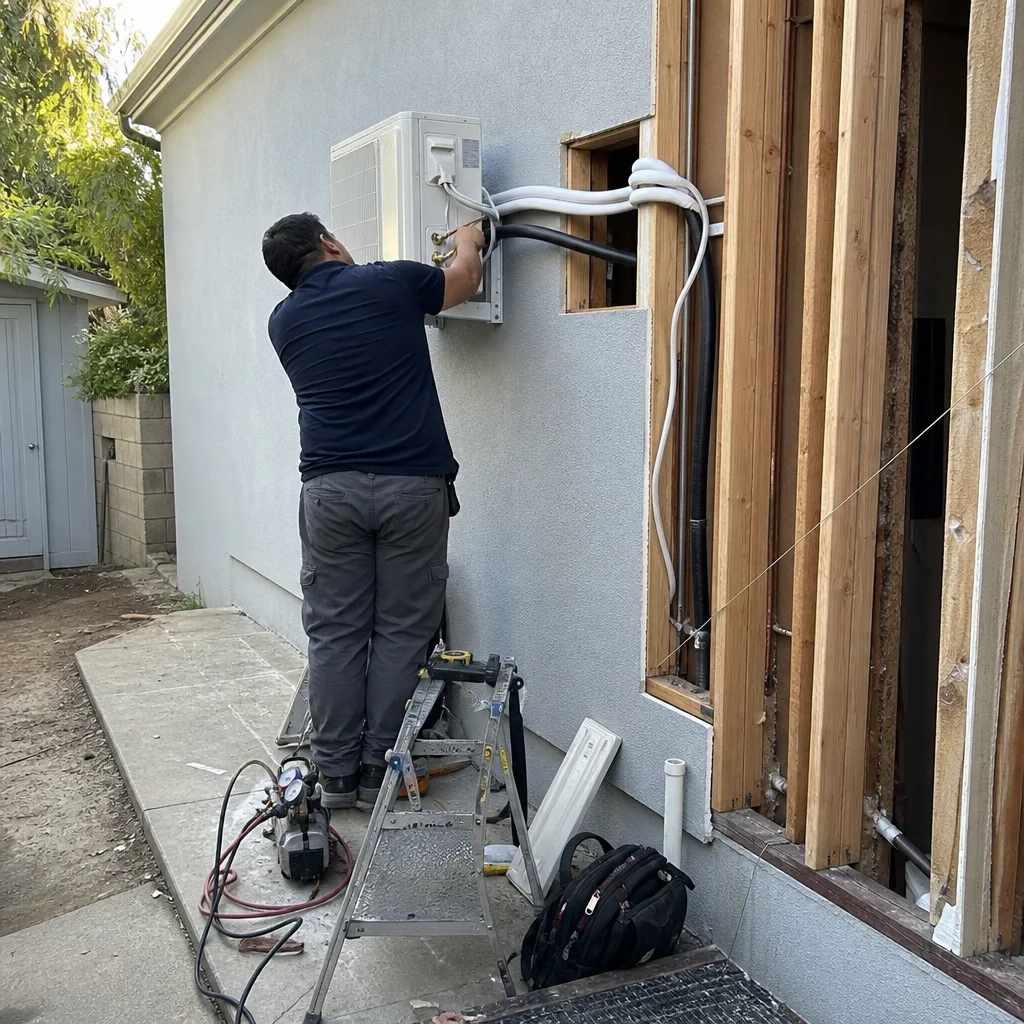
This calendar integrates Burbank’s specific climate patterns with the maintenance needs of typical ADU systems and finishes.
January-February: Post-Storm Recovery
- Inspect slab perimeter for efflorescence or moisture staining after first major storm
- Verify drainage slopes; regrade if scoured by Santa Ana debris
- Test all GFCI outlets (required by code in ADUs; monthly testing is manufacturer guidance)
- Document interior and exterior condition with dated photos
March-April: Pre-Summer Preparation
- Schedule mini-split professional service: coil cleaning, refrigerant check, drain line verification
- Inspect and replace sealant at all utility penetrations before UV intensifies
- Test smoke and CO detectors; replace batteries
- Review BWP rate schedule for summer tier changes
May-July: Wildfire Smoke Season
- Clean mini-split filters every 7-10 days during AQI >100 events
- Inspect exterior finish for UV damage: chalking, edge cracking, color fade
- Maintain defensible space if ADU is in hillside zone (Burbank Fire Department requirements)
- Schedule any exterior recoating for September-October window, before Santa Anas
August-September: Peak Heat and Rate Management
- Shift laundry, dishwashing, and EV charging to off-peak hours
- Verify mini-split condensate drain is clear; August humidity peaks strain drainage
- Inspect roof and gutters before Santa Ana season; repair any lifting or loose fasteners
October-December: Santa Ana Season
- Complete post-Santa Ana inspection checklist within 48 hours of major wind event
- Verify all exterior storage, furniture, and loose items are secured
- Final gutter cleaning after leaf drop
- Schedule any deferred maintenance before holiday contractor availability tightens
Special Notes for Prefab and Modular ADUs
Ellery ADU Studio specifies and coordinates prefab and modular systems from Abodu, Cover, Dvele, Mighty Buildings, Boxabl, Plant Prefab, Tuff Shed, and James Hardie within our single-contract design-build model. These systems have maintenance profiles that differ from site-built ADUs in specific ways relevant to Burbank’s climate.
Transport-seal inspection. Prefab modules arrive with sealant at panel joints and module connections. This sealant is applied in factory conditions and may not be specified for Burbank’s UV intensity. Inspect module-to-module joints annually starting year 2; factory sealant can degrade faster than site-applied products when the UV specification was conservative. Abodu and Cover systems we have installed in Burbank both use high-grade sealants, but the inspection interval should still be annual, not the 3-5 years generic guidance suggests.
Foundation interface. Prefab ADUs typically use pier or stem-wall foundations with precise leveling requirements. Burbank’s clay soil swell-shrink cycle can affect level over time. Check door and window operation seasonally; binding indicates foundation movement. The fix is typically shim adjustment at pier connections, not structural repair, but it requires prompt attention to prevent frame stress.
Utility chase sealing. Dvele and Mighty Buildings systems route utilities through dedicated chases between modules. These chases have factory seals that must remain intact for fire rating and weatherproofing. Annual inspection of chase access panels is essential; Santa Ana winds can dislodge improperly secured panels.
Warranty documentation. Prefab systems carry manufacturer warranties separate from builder warranties. Maintain both sets of documents, and note that manufacturer warranties often require documented annual maintenance to remain valid. The Haven Standard’s documented photo record satisfies this requirement for our clients.
Common Mistakes to Avoid
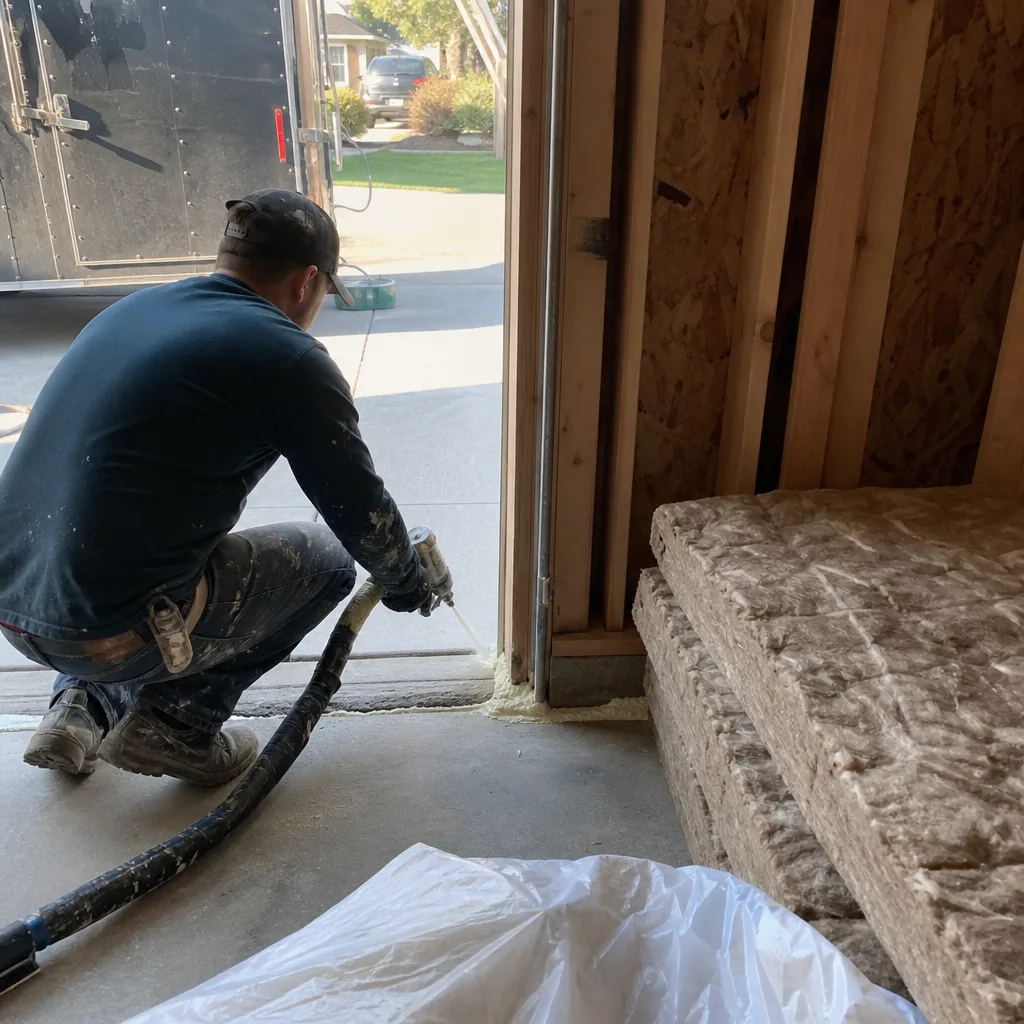
- Using coastal California maintenance intervals. Burbank’s UV and Santa Ana exposure accelerate degradation 20-30% faster than Santa Monica or Long Beach. A guide written for the coast will leave you behind schedule.
- Ignoring the permit set for maintenance specs. The structural drawings specify fastener spacing, sealant type, and drainage design that generic maintenance ignores. Your maintenance should reference the specific products and spacing your ADU was built with, not generic guidance.
- Waiting for visible damage to inspect. By the time stucco cracks or sealant fails visibly, water intrusion has already begun. Inspect on schedule, not on symptoms.
- Skipping documentation. Warranty claims and resale disclosures require evidence of maintenance. Photos with dates, stored with your permit set, are the standard we apply on every project.
- Mixing incompatible sealants. Polyurethane over silicone, or vice versa, causes adhesion failure. Check your closeout packet for the original sealant specification; match it exactly for touch-ups.
- Neglecting defensible space in hillside zones. Burbank Fire Department enforces clearance requirements that apply to ADUs. Non-compliance can result in fines and insurance complications, not just fire risk.
- Assuming prefab maintenance is “set and forget.” Factory precision does not eliminate the need for inspection; it changes the inspection points. Module joints and utility chases need attention site-built ADUs do not.
When to Call a Professional
Some maintenance tasks require licensed expertise, and attempting them without it voids warranties and creates liability. Call a professional for: roof work on slopes over 4:12; electrical panel work or GFCI troubleshooting that persists after reset; refrigerant handling or compressor diagnosis on mini-split systems; foundation leveling or crack monitoring that shows progression; and any work that requires permit amendment or inspection.
Ellery ADU Studio Burbank offers free estimates for maintenance assessments, system evaluations, and deferred maintenance catch-up. We also provide a Free Second Opinion on any written estimate you have in hand from another provider. Call (747) 322-4648 to schedule. A live person answers 24/7.
Frequently Asked Questions
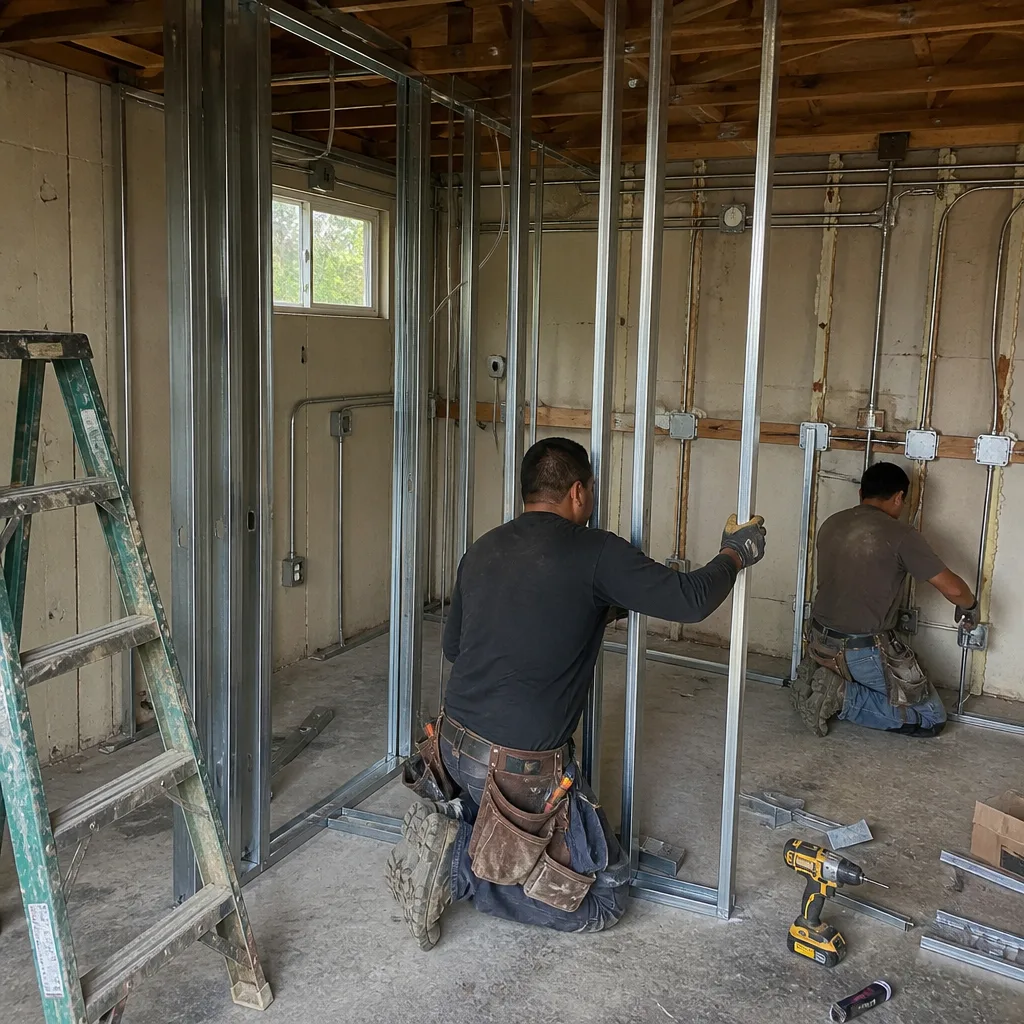
Annual maintenance for a typical Burbank ADU runs $800-$1,500, covering two mini-split service visits, filter replacements, sealant touch-ups, and gutter cleaning. Deferred maintenance catch-up, including recoating or drainage correction, runs $3,000-$7,000 depending on what was delayed. Call (747) 322-4648 for an exact quote on your ADU - estimates are free.
Under Haven Standard Clause 1, every project is quoted with a written price before any work begins. The scope is locked at signing; no door-side upsells, no scope creep. If we find something unexpected during maintenance, we document it, quote the additional work separately, and you approve before we proceed.
During AQI >100 events, clean filters every 7-10 days and replace at 3-4 month intervals, not the 6-12 months standard guidance suggests. The $12-$18 filter cost is minor compared to compressor damage from restricted airflow.
Routine maintenance - cleaning, filter replacement, sealant touch-up, regrading - does not require permits. Work affecting structure, electrical, or plumbing systems may require permit amendment. We pull all required permits and pass all inspections as part of our single-contract service; you are never responsible for permit logistics.
Date-stamped photos of condition before and after maintenance, product labels for any materials used, and service invoices with scope description. The Haven Standard includes a documented photo record on every visit; clients receive evidence of what was found and what was done, not a summary.
Yes. We provide maintenance assessments and catch-up services for ADUs from any builder, with the same written pricing and documentation standards. We also offer a Free Second Opinion on any written maintenance estimate you have in hand. Our license number appears on every page, verified, not just claimed.
The Bottom Line
Burbank’s climate creates specific, predictable stress on ADUs that generic maintenance guidance does not address. Santa Ana winds test roofing fastening; UV exposure accelerates finish degradation; wildfire smoke demands more frequent HVAC maintenance; and clay soils require active drainage management through wet season. A documented, scheduled maintenance program protects your investment, maintains warranty coverage, and preserves resale value. The cost of prevention is always lower than the cost of repair, and the documentation is as important as the work itself.
Call (747) 322-4648 to schedule your free maintenance assessment or to get a Free Second Opinion on any written estimate already in hand. A live person answers 24/7.
Written by Nadia Ellery, Owner at Ellery ADU Studio Burbank, serving Burbank since 2015.