
James Hardie Site Prep & Utilities: The Burbank Owner’s Guide
James Hardie site prep and utility rough-in for ADU projects in Burbank typically runs $8,500-$18,000 depending on trench depth, existing utility capacity, and whether we’re tying into city sewer or septic. We stock James Hardie-compatible moisture barriers, galvanized fasteners, and flashing systems on every Burbank truck, and most utility tie-in assessments happen within 48 hours of your call. Most owners realize something’s off when their general contractor discovers standing water against the Hardie backer during framing, or when Burbank Building & Safety flags a missing weep screed at pre-drywall inspection - both are fixable, but neither should have happened if the prep was spec’d to Hardie’s installation requirements from the start.
Which James Hardie Models This Applies To
This applies to any James Hardie cladding system specified for an ADU or garage conversion in Burbank, whether you’re using HardiePlank lap siding, HardiePanel vertical siding, or HardieShingle for a gable detail. The critical compatibility point isn’t the cladding profile - it’s the substrate and drainage plane behind it. Hardie requires a minimum 6-inch clearance from finished grade to the bottom of the siding, with a corrosion-resistant weep screed at the base of every stucco or plaster assembly. In Burbank’s clay-heavy Magnolia Park soil, we’ve seen that 6-inch minimum become 8 inches after seasonal heave, which is why we spec galvanized Z-flashing and a dual-layer building wrap on every Hardie install we coordinate.
We carry OEM James Hardie fasteners - the 0.120-inch ring-shank hot-dipped galvanized nails specified for HardiePlank - plus quality equivalents from Simpson Strong-Tie that meet the same ASTM A153 standard. The OEM nail costs more per pound but eliminates the warranty question; the Simpson equivalent saves roughly 15% on fastener line items and carries the same corrosion rating. For moisture barriers, we stock HardieWrap and Tyvek HomeWrap interchangeably - both are code-compliant in Burbank, but HardieWrap’s perm rating (35 US perms) performs better in the San Fernando Valley’s dry heat cycles where we see more thermal expansion stress on seams.
Signs Your James Hardie Site Prep & Utilities Is Failing
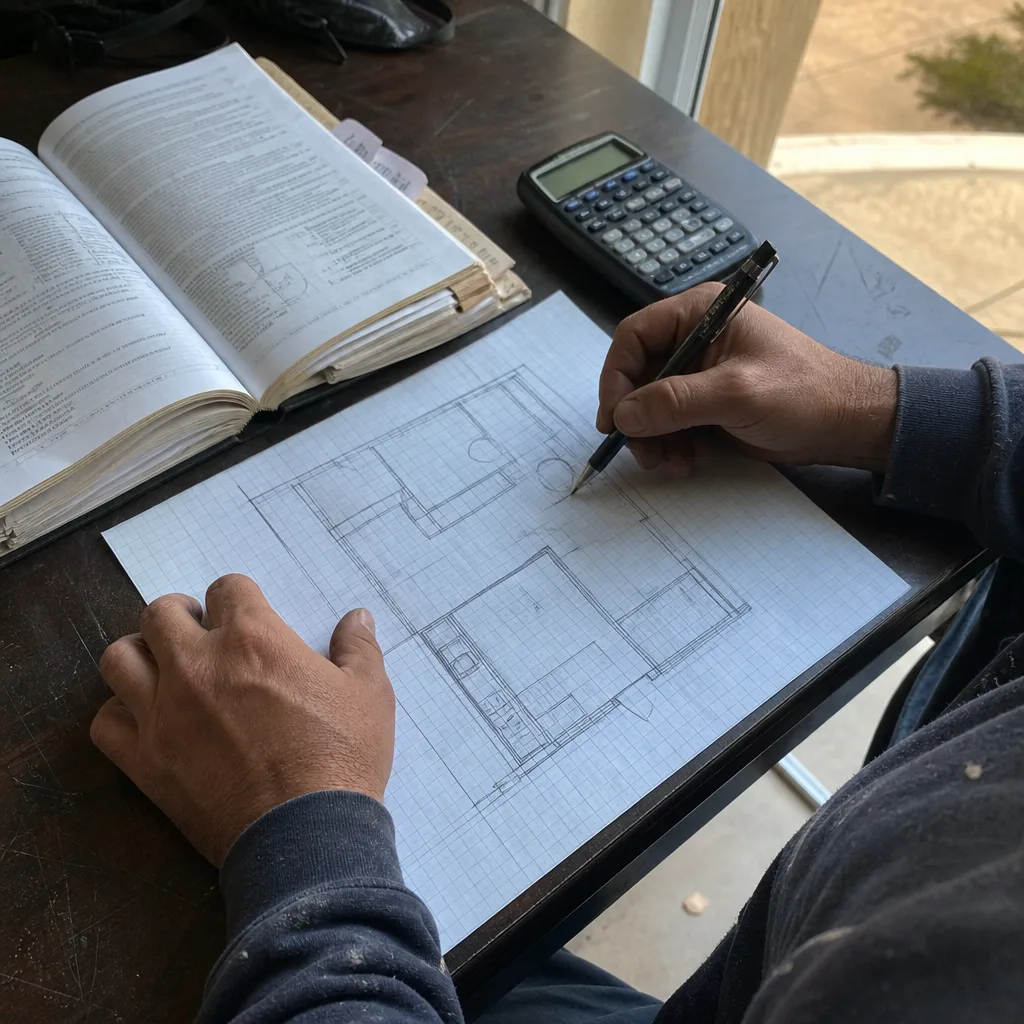
- Water staining on interior drywall after the first winter rain. This usually traces to a missing or improperly lapped sill pan beneath a window or door opening in the Hardie assembly. The water finds the gap between rough framing and cladding, then travels the path of least resistance - often across a header and down an interior wall. We document this with photos showing the pan installation and the corrected detail.
- Hardie boards pulling away from the wall at the bottom course. The cause is almost always inadequate fastening into the sheathing, or sheathing that wasn’t rated for the fastener spacing Hardie requires (6 inches on center at panel edges, 12 inches in the field). In Burbank’s older neighborhoods like the Rancho area, we’ve found 3/8-inch plywood where 1/2-inch was spec’d - the fastener simply doesn’t bite deep enough.
- Cracked or crumbling caulk joints at trim intersections. Hardie calls for paintable latex sealant at all trim joints, but if the substrate behind the trim wasn’t shimmed to create a drainage gap, water sits behind the joint and pushes the caulk out from the back. The fix isn’t more caulk - it’s pulling the trim, adding composite shims, and resealing with backer rod.
- Utility trench backfill settling below grade within six months. In Burbank’s expansive clay soils, untamped backfill drops 4 to 6 inches after the first wet season, exposing conduit or creating a pond against the foundation. We spec 3/4-inch crushed stone backfill in 6-inch lifts, each compacted to 95% standard Proctor density - the same standard Burbank Public Works requires for street cuts.
- Gas or electrical rough-in rejected at inspection for insufficient depth. Burbank requires 18 inches minimum cover for gas lines and 24 inches for primary electrical conduit - but those depths assume undisturbed soil. In the hills above Glenoaks, we’ve hit decomposed granite that fractures under trencher tracks, dropping effective cover by 3 inches. We measure twice and photograph the tape before backfill; the photo goes in your permit file.
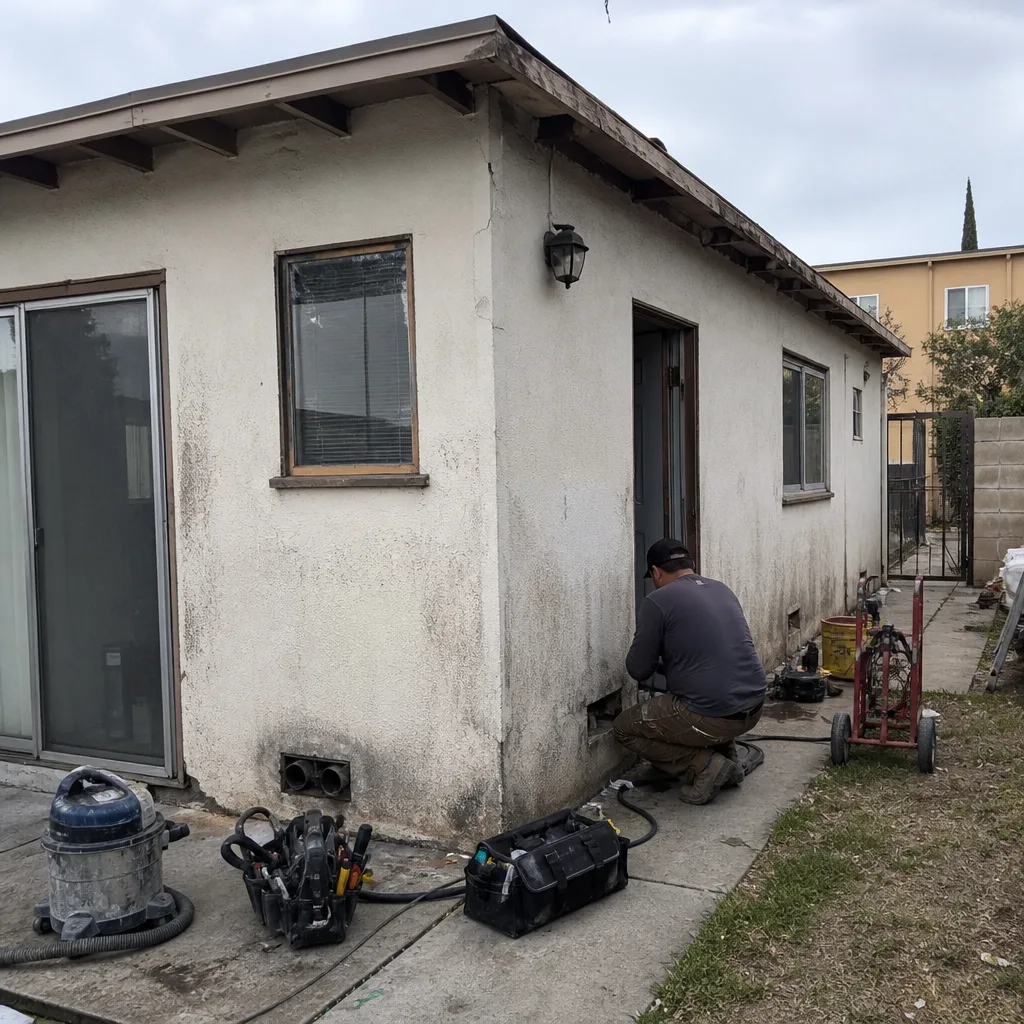 Before
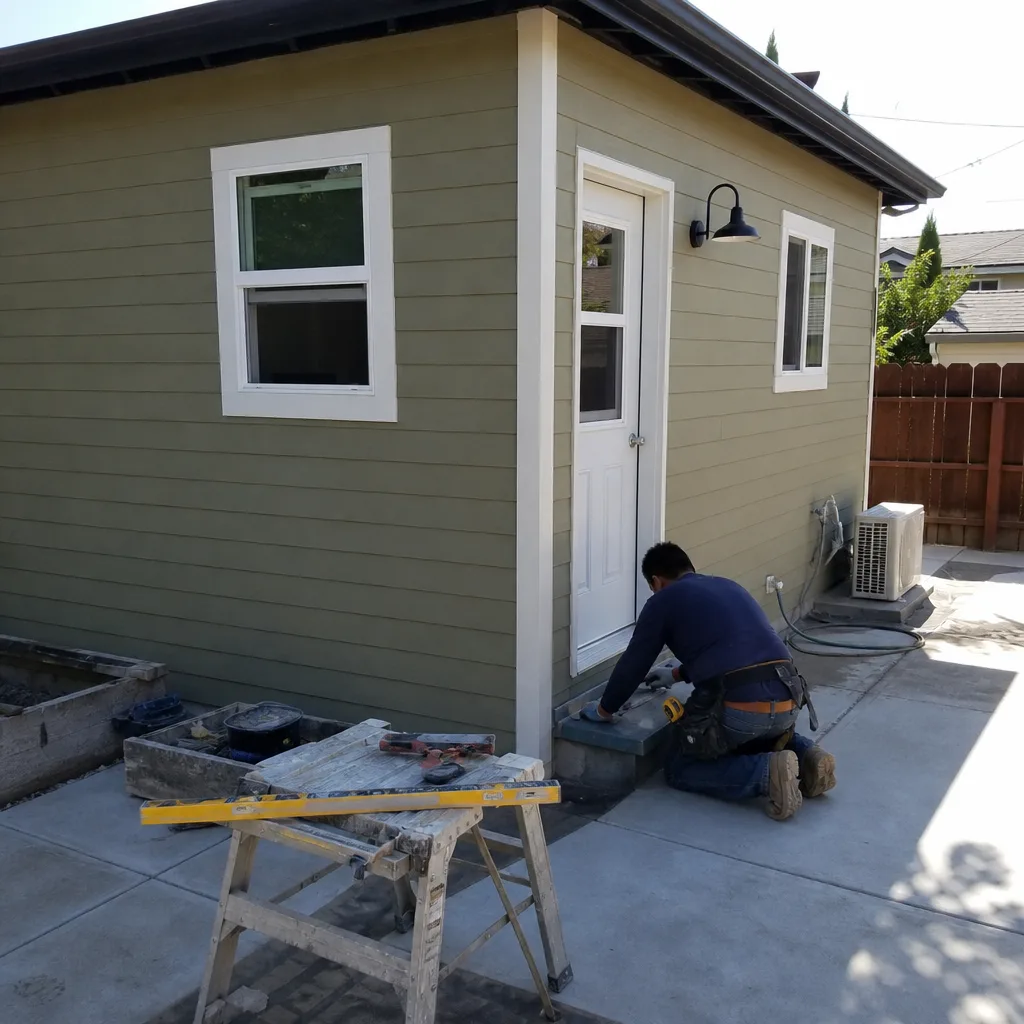 After
AfterReplacement Cost & What’s Included
For a typical Burbank ADU project, James Hardie site prep and utility rough-in breaks down as follows: drainage plane correction and weep screed installation runs $2,200-$4,800; utility trenching, bedding, and backfill to Burbank code runs $4,500-$9,500 for runs under 75 feet; and fastener, flashing, and moisture barrier replacement on an existing partial install runs $1,800-$3,700. The wide ranges reflect soil conditions, access constraints (a Burbank hillside lot with retaining walls requires hand digging in sections), and whether we’re coordinating with LADWP for electrical service upgrades or SoCalGas for meter splits.
Every line item arrives as a written scope before work starts, per Haven Standard Clause 1. The number goes on paper first. Everything else follows from that. Labor carries our standard 365-Day Done Right Promise; materials carry the manufacturer’s warranty plus our installation guarantee. We pull all permits and schedule Burbank inspections - the permit cost is listed separately in your quote, not buried in overhead.
DIY or Call Us?
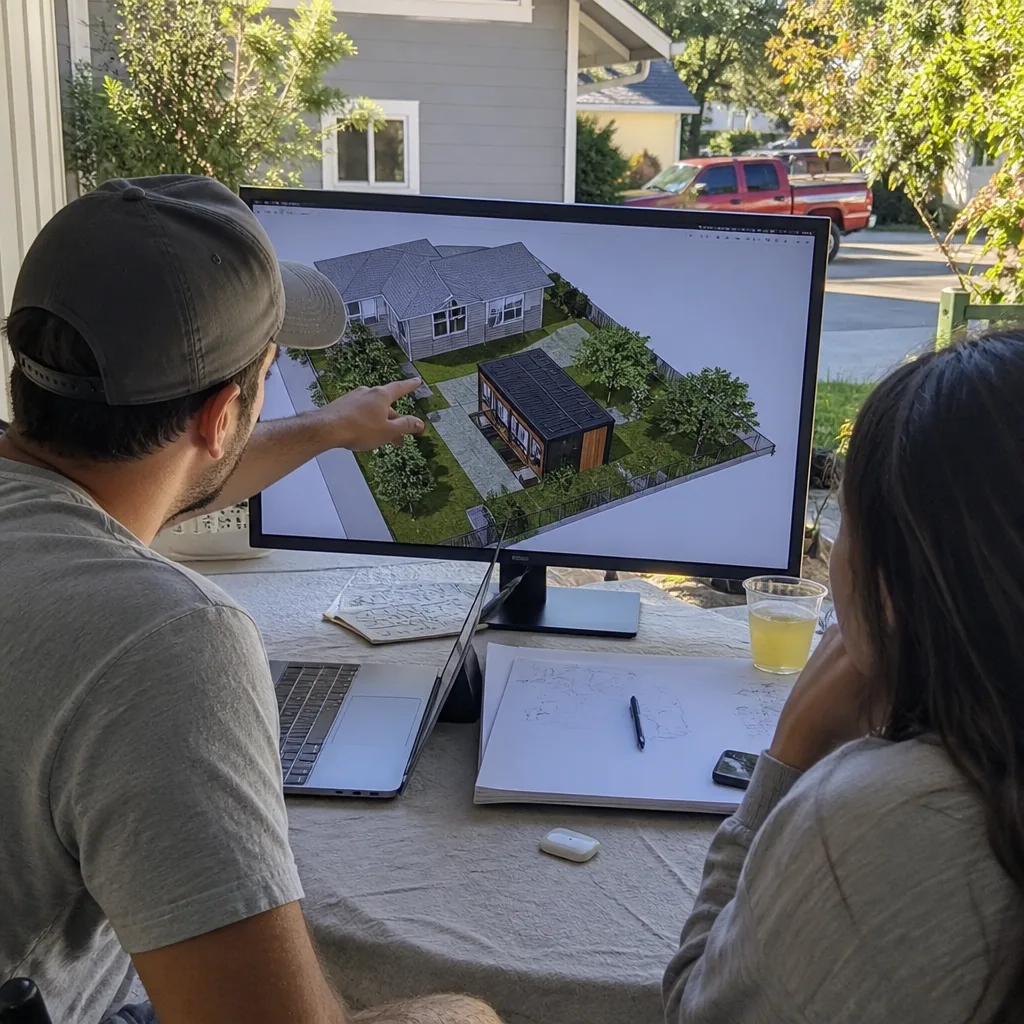
An owner can safely check the visible symptoms: measure grade-to-siding clearance with a tape measure, look for cracked caulk with binoculars, or verify that utility covers sit flush with finished grade. What you cannot safely assess yourself is the drainage plane behind the cladding, the torque on structural fasteners, or the integrity of gas and electrical conduit below grade. Hardie siding weighs 2.3 pounds per square foot - a full panel is unwieldy on a ladder, and the fiber-cement dust requires OSHA-compliant respirators during cutting.
More critically, Burbank Building & Safety will red-tag any gas or electrical work not performed by a C-36 or C-10 licensed contractor, and your homeowner’s policy may deny a claim for unpermitted utility work. We carry both licenses; the numbers appear on every page of our site. If you’re holding a written estimate from another contractor, we’ll review it against your permit set at no charge - our Free Second Opinion. For Hardie site prep and utility work that’s done right the first time, call us at (747) 322-4648.
FAQs
Properly installed, the drainage plane and utility infrastructure should last the life of the structure - 50+ years for galvanized fasteners in Burbank’s dry climate, 30+ years for PVC conduit, and indefinite for properly bedded copper or PEX water lines. The weak point is usually the sealant at penetrations, which we recommend inspecting every 7 to 10 years. Call (747) 322-4648 to schedule an inspection - estimates are free.
Partial repair is often possible if the failure is localized - a single missing sill pan, a section of improperly flashed trim, or a settled utility trench in one run. We don’t replace what isn’t broken; your written scope identifies the specific failure points and the repair versus replacement recommendation for each. Call (747) 322-4648 and we’ll tell you which category your project falls into.
Most corrections on an existing Burbank ADU run 3 to 5 working days for the Hardie drainage plane work, plus 2 to 3 days for utility trenching and tie-in if we’re not waiting on LADWP or SoCalGas service upgrades. Burbank’s inspection schedule typically adds 2 to 4 business days for rough and final utility inspections. We coordinate all inspections and include the schedule in your written scope. Call (747) 322-4648 for a timeline specific to your project.
We maintain Hardie-compatible fasteners, flashing, building wrap, and weep screed on every Burbank crew truck, plus 3/4-inch crushed stone and conduit bedding material at our local staging area. Specialty items like color-matched Hardie trim or LADWP-approved meter sockets are ordered with a 3 to 5 day lead time - we don’t charge markup on materials, and every invoice shows manufacturer part numbers. Call (747) 322-4648 to confirm availability for your specific repair.
Written by Nadia Ellery, Owner, Ellery ADU Studio Burbank at Ellery ADU Studio Burbank, serving Burbank and nearby areas.